
Shake the bottle
Helps the microbes disperse evenly after settling.
WCzyme is presented as a Bacillus spp. solution aimed at converting NH₃/NH₄⁺, breaking down organic matter and limiting odour-causing microbes in damp environments.
The dossier names three main sources: ammonia and urea from urine, accumulated organic compounds, and the growth of odour-causing bacteria.
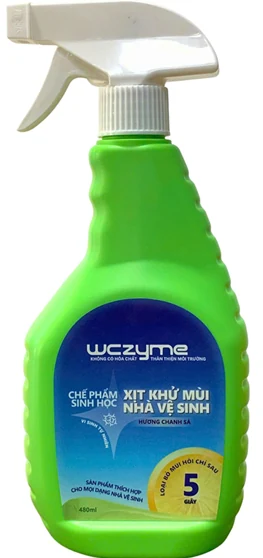
The dossier highlights the value of regular use: safe, less risk of corroding fixtures, and environmentally friendly.
Helps the microbes disperse evenly after settling.
Apply to the toilet bowl, urinal, drain or wherever odour arises.
Maintains the density of Bacillus spp. on surfaces and in pipes.
Somewhere dry and cool, out of direct sun, with the cap closed.
Avoid spraying into eyes or face, and keep out of reach of children.
Product copy in this HTML build is edited from the KMVE presentation dossier of January 2026. Claims, dosage and the formal regulatory file must be approved by KMVE before any commercial release.